
Posts Tagged ‘lbnl’

Advanced Electron Microscopy Reveals Short Range Ordering Motifs in Semiconductors
In a recent paper published in Science, Prof. Minor’s group used energy-filtered scanning nano electron diffraction (4D-STEM) to uniquely identify short range ordering motifs in GeSiSn. This publication represents the first direct evidence of SRO in a semiconductor material, an exciting new area for exploration in the field of microelectronics. Read the full article here.
Read More
A New Way to Engineer Composite Materials
Silica nanoparticles affixed with a distribution of polystyrene chains (purple) self-assemble into hexagonal lattices. Depending on how the chains are organized on the particle surface, they tangle together (purple) or unravel (blue) when compressed. (Credit: Tiffany Chen; Ting Xu) You can find the article here: https://newscenter.lbl.gov/2025/03/06/a-new-way-to-engineer-composite-materials/
Read More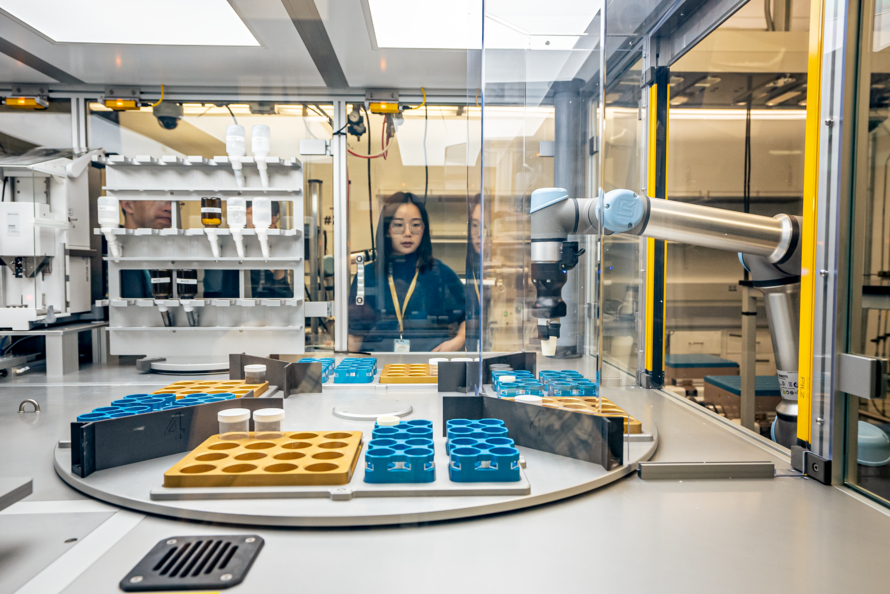
Meet the Autonomous Lab of the Future By Lauren Biron April 17, 2023
Berkeley Lab researcher Yan Zeng looks over the starting point at A-Lab. The new lab combines automation and artificial intelligence to speed up materials science discovery. (Credit: Marilyn Sargent/Berkeley Lab) MSE’s Prof. Ceder’s automated lab, A-Lab, is featured at LBNL news: Robots operate instruments and artificial intelligence makes decisions to find useful new materials at the…
Read More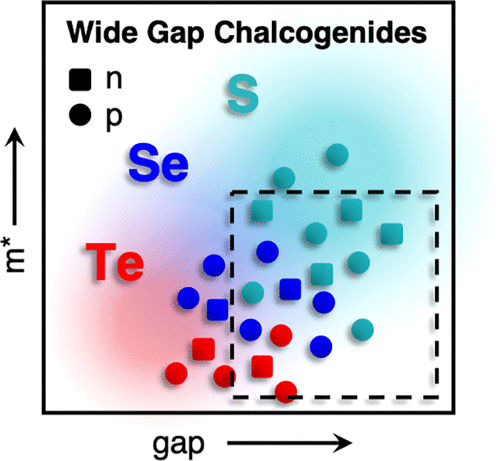
Wide Band Gap Chalcogenide Semiconductors
Wide Band Gap Chalcogenide Semiconductors Scientists at UC Berkeley / Berkeley Lab (R. Woods-Robinson and K. Persson) and the National Renewable Energy Laboratory have released a comprehensive review of a unique, emerging class of materials called “wide band gap chalcogenide semiconductors”. These are materials composed of chalcogen elements (sulfur, selenium, and tellurium) that are both…
Read More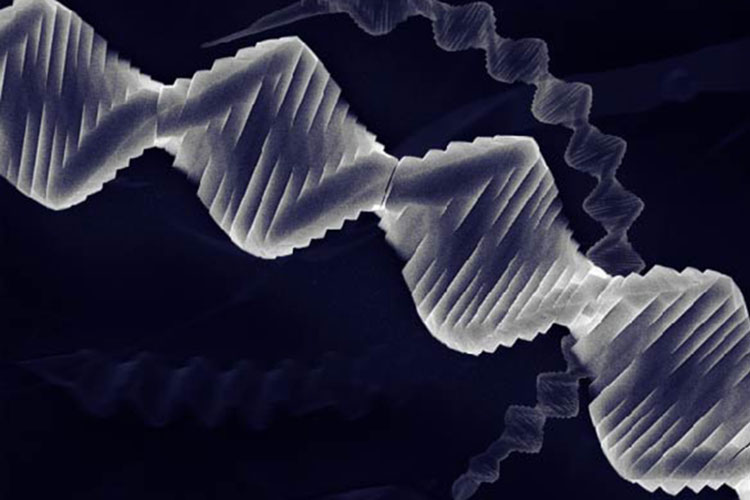
Crystal with a twist: scientists grow spiraling new material
Crystal with a twist: scientists grow spiraling new material Prof. Jie Yao’s team have created new inorganic crystals made of stacks of atomically thin sheets that unexpectedly spiral like a nanoscale card deck. Their surprising structures, reported in a new study appearing in the Wednesday, June 20 issue of the journal Nature, may yield unique optical, electronic and…
Read More